

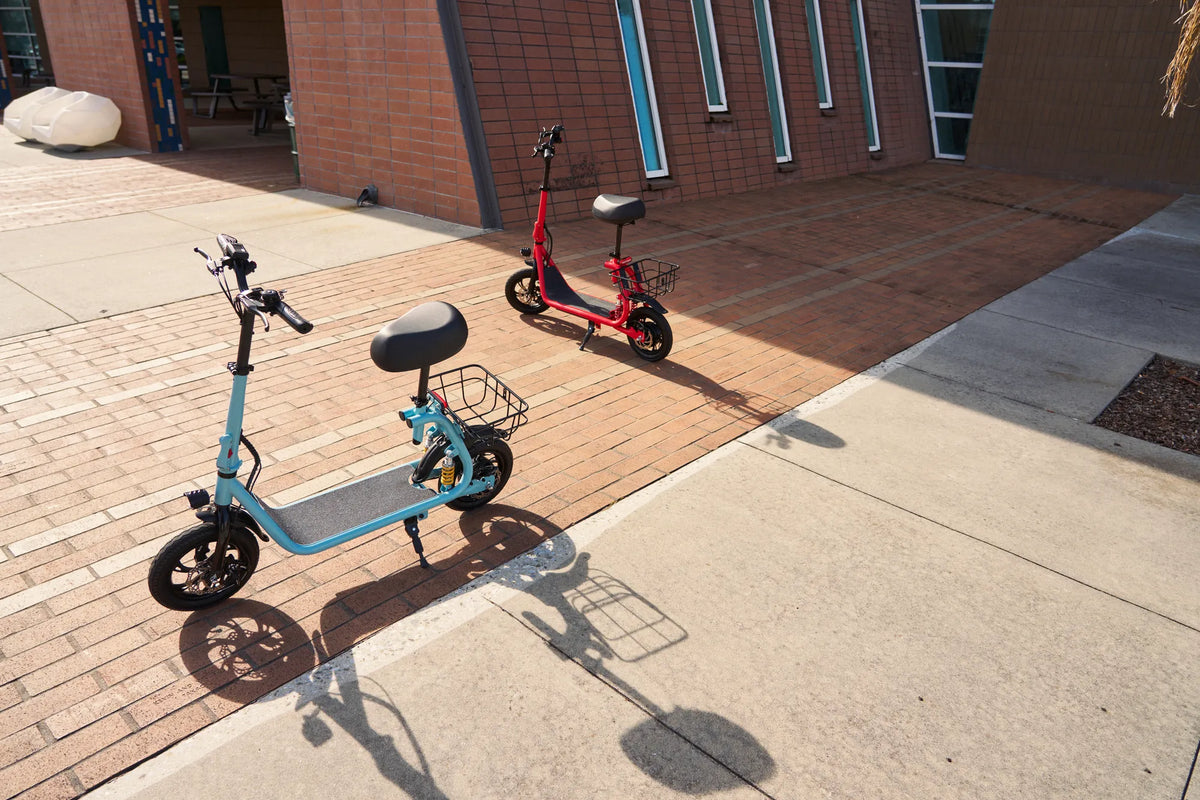
If you're seeking an electric scooter that transforms steep hills into minor inclines and delivers thrilling acceleration on demand, you've likely encountered the term '52V scooter.' This specification isn't just marketing jargon; it represents a significant leap in performance and capability. This guide will dissect exactly what a 52V system offers, who it's for, and how to choose a model that balances raw power with reliability and safety. You'll learn the engineering advantages, critical features to prioritize, and practical considerations for integrating a high-voltage scooter into your daily life or adventurous rides.
Introduction to 52V Electric Scooters
A 52V scooter is defined by its nominal battery voltage, a key indicator of its potential power and performance. While most entry-level commuter scooters operate on 36V or 48V systems, the 52V platform sits in a performance sweet spot. It offers a substantial upgrade in capability without venturing into the extreme weight and cost of ultra-high-voltage models like 60V or 72V scooters.
The '52V' refers to the electrical pressure of the battery pack. A higher voltage system allows the motor to draw power more efficiently. This translates directly to a more responsive and powerful riding experience. For riders who have outgrown the limitations of standard scooters, a 52V model is often the logical next step.
Brands like Gyroor have developed robust 52V scooters that cater to this demand. These models are engineered for riders who need to conquer challenging urban topography or simply desire a faster, more confident commute. The core promise is consistent power delivery, whether you're accelerating from a stoplight or climbing a sustained grade.
Understanding this voltage tier is crucial for making an informed purchase. It represents a commitment to higher performance, which comes with considerations around weight, price, and necessary safety gear. This guide will navigate all these aspects in detail.
Why Voltage Matters: The Performance Advantages of 52V Systems
Voltage is a fundamental determinant of an electric scooter's performance ceiling. Think of it as the width of a highway: a 52V system is a wider highway than a 48V system, allowing more electrical 'traffic' (power) to flow to the motor with less resistance. This fundamental advantage manifests in several key riding experiences that define the 52V scooter category.
The primary benefit is more efficient power transfer. For a given power output (in watts), a higher-voltage system draws fewer amps of current. Lower current reduces heat buildup in the wiring and motor, improving overall efficiency and longevity. This engineering principle is why performance vehicles, from electric cars to scooters, utilize higher voltage architectures.
This efficiency gain isn't just theoretical. It results in tangible benefits like reduced 'voltage sag.' All batteries experience a temporary drop in voltage under heavy load, like during hard acceleration. A 52V battery starts from a higher baseline, so the sag has a smaller proportional impact, allowing the motor to maintain its peak power output for longer. This means your scooter feels just as powerful at 50% battery as it did at 100%.
Ultimately, the move to 52V is about overcoming limitations. It's for the rider who no longer wants to watch their speed plummet on a hill or wait patiently for their scooter to reach cruising speed. The advantages are systemic, affecting every aspect of performance from a standstill to top speed.
Increased Torque and Hill-Climbing Power
The most immediately noticeable benefit of a 52V scooter is its formidable torque. Torque is the rotational force that propels the scooter forward. A 52V system, especially when paired with a high-wattage motor, generates significantly more torque than a comparable 48V setup.
This translates directly to explosive acceleration off the line. In urban environments, this means merging confidently with traffic and quickly moving through intersections. The scooter responds to throttle inputs with urgency, making riding in stop-and-go traffic less tedious and more dynamic.
Hill-climbing capability sees the most dramatic improvement. A typical 52V scooter can comfortably tackle grades of 15-25% without a drastic reduction in speed. Where a 48V scooter might slow to a crawl on a steep bridge or hill, a 52V model maintains momentum. This makes routes that were previously challenging or impossible now fully accessible.
For example, a Gyroor 52V scooter with a 1000W motor will demonstrate markedly better hill performance than a 48V 1000W model. The higher voltage allows the motor to operate more efficiently under the high-load condition of a climb, delivering more of its rated power to the wheel where it's needed.
Higher Top Speeds and Sustained Performance
Top speed is directly influenced by voltage. A 52V scooter typically achieves a top speed range of 28 to 40+ miles per hour, depending on motor power, rider weight, and terrain. This is a clear step above the 20-28 mph common for many 48V commuter scooters.
This higher top speed isn't just a number on a display. It's about the ability to sustain higher cruising speeds. On long, flat stretches of bike path or road, a 52V scooter can maintain 30+ mph without straining the system. The motor isn't working at its absolute limit, which contributes to cooler operation and better efficiency.
The sustained performance is key for longer commutes. Reducing a 30-minute commute by maintaining a higher average speed is a practical benefit. Furthermore, having speed in reserve means you can safely accelerate to navigate around obstacles or match the flow of city traffic when necessary and legal.
It's critical to note that with great speed comes great responsibility. Riding at these velocities necessitates full protective gear and a thorough understanding of local laws, which often limit electric scooters to lower maximum speeds.
Improved Efficiency and Potential for Greater Range
While increased power often comes at the cost of range, a 52V system can be more efficient. Because it draws fewer amps for the same power output, there are lower energy losses as heat in the controllers and wiring. This improved electrical efficiency can contribute to better overall range.
However, range is predominantly determined by battery capacity, measured in Amp-hours (Ah). A 52V scooter usually comes with a larger battery pack—often 18Ah, 21Ah, or higher—to feed its powerful motor. The combination of higher voltage (V) and higher capacity (Ah) results in a much larger total energy storage, measured in Watt-hours (Wh).
The formula is simple: Voltage (V) x Amp-hours (Ah) = Watt-hours (Wh). A 52V 21Ah battery pack stores 1,092 Wh of energy. A common 48V 13Ah pack stores only 624 Wh. This 75% increase in energy capacity is the primary reason a well-designed 52V scooter can offer both high performance and impressive range, often between 25 to 45 miles per charge under realistic conditions.
Therefore, when comparing scooters, look at the Watt-hour (Wh) rating alongside the voltage. A 52V scooter with a high Wh rating is engineered for both power and distance, making it a true all-rounder for demanding commutes.
Key Features to Look for in a Quality 52V Scooter
Voltage is the starting point, but a great 52V scooter is defined by the synergy of all its components. Prioritizing build quality, safety systems, and reliable engineering is paramount when dealing with this level of performance. Cutting corners on a high-power scooter can lead to safety issues and a disappointing ownership experience.
The frame must be robust enough to handle the stresses of higher speeds and more dynamic riding. Look for aerospace-grade aluminum alloy constructions with reinforced welding at critical joints. The folding mechanism, if present, should be over-engineered and feature a secure locking pin to prevent any play or wobble at speed.
Suspension becomes non-negotiable. At 30+ mph, a small bump can become a major instability. A quality 52V scooter will feature a combination of front and rear suspension—typically hydraulic or spring-based—with sufficient travel to absorb impacts. This protects both the rider and the scooter's electronics from excessive vibration and shock.
Finally, consider the deck size, tire type (air-filled for comfort vs. solid for puncture resistance), and lighting. A powerful headlight, brake light, and side reflectors are essential for visibility. These features collectively transform a powerful drivetrain into a refined, safe, and enjoyable vehicle.
Motor Power and Type (Hub vs. Dual)
The motor is the partner to the 52V battery. Typical wattages for this category range from 1000W to 2000W or more. A single 1000W-1200W rear hub motor is common and provides ample power for most riders, offering strong acceleration and hill-climbing.
Dual-motor setups (e.g., 1000W + 1000W) represent the peak of 52V performance. With both wheels driven, these scooters offer astonishing acceleration, true all-wheel-drive traction on loose or wet surfaces, and unparalleled hill-climbing torque. They can often conquer grades over 30%. However, dual-motor operation drastically increases energy consumption, reducing range unless the battery is very large.
Many advanced scooters offer selectable drive modes: single-motor for efficiency and range, and dual-motor for maximum performance when needed. This flexibility is a hallmark of well-designed high-performance models. When considering motor type, align it with your primary use case: a powerful single motor for efficient urban performance, or dual motors for off-road capability and ultimate acceleration.
Controllers are equally important. They manage the power flow from battery to motor. A high-quality, programmable controller ensures smooth throttle response, effective regenerative braking, and protects the system from over-current. Look for scooters that use name-brand controllers known for reliability.
Battery Quality, Capacity, and Safety
The battery is the heart, soul, and most critical safety component of any 52V scooter. Never compromise here. The pack should use high-density lithium-ion cells from reputable manufacturers like LG, Samsung, or Panasonic. These cells offer better longevity, performance, and safety margins than generic, no-name cells.
Capacity is king for range. For a 52V scooter, look for a minimum of 18Ah. For serious commuting or touring, 21Ah to 28Ah is ideal. Always check the Watt-hour (Wh) rating for the truest comparison of energy storage.
Safety is paramount. A UL-certified battery pack, like those used in Gyroor scooters, is the industry gold standard. UL certification involves rigorous testing for overcharge, short circuit, impact, and extreme temperatures, significantly reducing fire risk. The battery enclosure should be robust, well-sealed (at least IPX5 for water resistance), and securely mounted within the deck.
Proper Battery Management Systems (BMS) are essential. A good BMS monitors each cell group for voltage and temperature, ensures balanced charging, and provides protections against over-current, over-discharge, and short circuits. This electronic guardian is crucial for both safety and maximizing the battery's lifespan, which should be 500+ charge cycles with proper care.
Build Quality, Suspension, and Braking
Controlling a high-performance scooter demands an equally high-performance chassis and stopping system. The frame must be rigid; flex at high speed is disconcerting and dangerous. CNC-machined components, forged stems, and reinforced folding mechanisms are signs of quality engineering.
Suspension systems vary. Front and rear spring or hydraulic shocks are standard. Some performance models feature adjustable preload or damping, allowing riders to tailor the ride to their weight and road conditions. Effective suspension not only increases comfort but also keeps the tires in contact with the road for better braking and handling.
Braking is the most critical safety system. A 52V scooter must have a dual braking system. The best combinations include:
- Hydraulic Disc Brakes: Offer the strongest, most consistent, and progressive stopping power with minimal hand fatigue. The benchmark for performance scooters.
- Electronic Regenerative Braking (E-ABS): Uses the motor as a generator to slow the scooter, recapturing some energy into the battery. It's a great first braking layer but should always be paired with a mechanical brake for emergency stops.
- Mechanical or Cable Disc Brakes: Effective but require more frequent adjustment and can be less powerful than hydraulic systems.
A combination of electronic regen and dual hydraulic discs represents the pinnacle of 52V scooter braking, providing confidence-inspiring stopping power from high speeds.
Practical Considerations: Who is a 52V Scooter Right For?
Choosing a 52V scooter is a commitment to a higher tier of performance, weight, and investment. It's not the right choice for everyone. By clearly defining the ideal user profiles, you can determine if your needs align with what these powerful machines offer.
The primary differentiator is the nature of your commute or riding. If your route is short, perfectly flat, and you prioritize portability above all else, a lighter 48V or even 36V scooter may suffice. However, if your daily travel involves challenges that demand more from your vehicle, a 52V model becomes a compelling tool, not just a toy.
Consider the total cost of ownership. Beyond the higher purchase price, you may invest more in protective gear. The scooter itself, often weighing 55-75 lbs, is less portable and may require a dedicated storage space. These practicalities are as important as the performance specs when making a decision.
The following breakdown will help you identify which rider category you fall into and whether the advantages of a 52V system justify the trade-offs.
The Urban Commuter with Challenges
This rider faces a demanding daily route. Commutes of 10 miles or more are common. The path includes sustained hills, bridges, or overpasses that would cripple a less powerful scooter. For this rider, a 52V scooter is a practical necessity.
The ability to maintain a speed of 20+ mph up a hill means a predictable and faster commute time. The increased torque allows for confident merging and acceleration in urban traffic, increasing safety by keeping pace with the flow of vehicles where permitted.
Carrying capacity matters. Many 52V scooters have stronger decks and stems capable of supporting rider weights of 265 lbs or more, plus a backpack or briefcase. The larger, more stable platform and superior suspension also make longer rides less fatiguing.
If your commute is a workout on a standard scooter, a 52V model transforms it into an efficient, enjoyable, and sweat-free journey. It's the difference between barely making it and arriving comfortably.
The Performance and Off-Road Enthusiast
For this rider, the journey is the destination. A 52V scooter is a source of adrenaline and exploration. The pursuit is top speed, rapid acceleration, and the capability to venture onto light trails, gravel paths, or beachfronts.
Dual-motor 52V scooters are the preferred choice here. The all-wheel-drive provides traction on loose surfaces, and the combined power output delivers breathtaking acceleration that rivals some electric motorcycles. Off-road features like knobby tires, increased ground clearance, and ultra-robust suspension are key.
This use case accepts the trade-offs: heavier weight, shorter range when using both motors aggressively, and the need for the highest level of safety gear. It's a hobbyist or enthusiast segment where the scooter is a recreational vehicle first and a commuter second.
Brands catering to this market emphasize durability and extreme performance. If your goal is to explore beyond paved paths or experience the pinnacle of electric scooter thrill, a high-end 52V model is your entry ticket.
Comparing 48V vs. 52V: Making the Informed Choice
A direct comparison clarifies the value proposition. The table below summarizes the key differences between typical mid-tier 48V commuter scooters and performance-oriented 52V models.
| Feature | Typical 48V Commuter Scooter | Typical 52V Performance Scooter |
|---|---|---|
| Nominal Voltage | 48V | 52V |
| Motor Power | 500W - 800W | 1000W - 2000W+ |
| Top Speed | 20 - 28 mph | 28 - 40+ mph |
| Hill Climb Grade | 10 - 15% | 15 - 30%+ |
| Acceleration | Moderate | Strong to Very Strong |
| Range* | 15 - 25 miles | 25 - 45 miles |
| Battery Capacity | 10Ah - 15Ah | 18Ah - 28Ah |
| Weight | 35 - 50 lbs | 55 - 75 lbs |
| Primary Use Case | Short/Flat Commutes, Portability | Long/Hilly Commutes, Performance, Off-Road |
| Braking System | Mechanical Disc or Drum | Dual Hydraulic Disc + E-ABS |
| Suspension | Basic or None | Full (Front & Rear) |
*Range varies drastically with rider weight, terrain, speed, and temperature. Values are realistic estimates.
The choice is clear: if your priority is maximum portability and cost-effectiveness for simple commutes, a 48V scooter is adequate. If you require superior power, speed, hill-climbing, and range, and are willing to accept greater weight and cost, the 52V scooter is the definitive upgrade. It's a tool for overcoming obstacles, both literal and figurative.
Maximizing Your Investment: Safety, Maintenance, and Warranty
Owning a high-performance vehicle comes with heightened responsibility. Protecting your investment involves a three-pronged approach: protecting yourself with proper gear, protecting the scooter through regular maintenance, and protecting your purchase with a strong warranty. Neglecting any of these areas can lead to injury, premature failure, or financial loss.
A 52V scooter is a complex piece of personal electric vehicle (PEV) technology. It deserves care and respect. The practices outlined here will ensure you enjoy thousands of safe, reliable miles. They are not optional recommendations for this class of scooter; they are essential components of ownership.
Start with the mindset that you are riding a vehicle capable of motorcycle-like speeds. This dictates the level of safety gear, the diligence of maintenance, and the importance of manufacturer support. A brand that stands behind its product with a comprehensive warranty and accessible service is a key indicator of quality and long-term value.
Essential Safety Gear and Riding Practices
At the speeds a 52V scooter can achieve, a bicycle helmet is insufficient. A full-face motorcycle helmet or a certified downhill MTB helmet is non-negotiable. It protects your head, face, and jaw in a high-impact crash.
Beyond the helmet, gear up as if you were riding a motorcycle:
- Gloves: Motorcycle gloves with palm sliders and knuckle protection.
- Jacket: Abrasion-resistant motorcycle jacket with elbow and shoulder armor.
- Knee and Elbow Pads: Durable hard-shell pads.
- Sturdy Footwear: Closed-toe shoes or boots with good grip.
Riding practices must evolve with the scooter's capability. Always perform a pre-ride check of tires, brakes, and lights. Practice emergency braking in a safe area to understand your scooter's stopping distance. Ride defensively, assume you are invisible to drivers, and strictly obey local traffic laws regarding scooter use on roads, bike lanes, and paths.
Routine Maintenance Checklist
Proactive maintenance prevents minor issues from becoming major failures. Establish a routine based on mileage or weekly intervals.
- Tire Pressure: Check weekly. Inflate air-filled tires to the PSI marked on the sidewall. Proper pressure ensures range, grip, and prevents pinch flats.
- Brakes: Inspect brake pads for wear monthly. Listen for grinding. Test lever firmness. Hydraulic brakes may need fluid bleeds annually; mechanical brakes need cable adjustment.
- Bolts and Fasteners: Periodically check and tighten critical bolts on the stem, folding mechanism, handlebars, and wheels using the correct tools. Use thread-locker on key components.
- Cleaning: Wipe down with a damp cloth. Avoid high-pressure sprays on bearings or connectors. Models with IPX5 water resistance, like many from Gyroor, can handle rain and puddles, but should not be submerged.
- Battery Care: Avoid draining to 0%. Store with a 50-80% charge if not used for weeks. Charge in a cool, dry place and never leave charging unattended for extended periods. Use only the manufacturer's provided charger.
The Importance of a Strong Warranty and Support
The warranty is your safety net. For a 52V scooter, a minimum 1-year warranty on the frame, motor, and battery is standard for reputable brands. Gyroor, for instance, offers a comprehensive 1-year warranty, reflecting confidence in their UL-certified batteries and robust construction.
Read the warranty details carefully. What is covered? What constitutes misuse? How are claims processed? A brand with accessible, US-based customer support is invaluable for troubleshooting and arranging repairs.
A strong warranty is a proxy for build quality. A company that uses premium components expects them to last and is willing to back that expectation. It transforms your purchase from a disposable gadget into a durable vehicle with long-term support. Never buy a high-power scooter from a brand with a vague, short, or non-existent warranty.
Frequently Asked Questions (FAQ) About 52V Scooters
Q1: How far can a 52V scooter really go on a single charge?
Real-world range depends on battery capacity (Wh), rider weight, speed, terrain, and temperature. A 52V 21Ah (1092Wh) scooter can typically achieve 25-35 miles with mixed riding (some hills, varying speeds). Riding at top speed continuously will reduce range significantly. Always check the manufacturer's tested range and the Watt-hour rating for the best comparison.
Q2: Are 52V scooters legal to ride on public roads and bike lanes?
Laws vary by city, state, and country. Most jurisdictions regulate scooters by maximum speed (often 15-20 mph) and/or motor wattage, not voltage. A 52V scooter may be capable of 30+ mph, but it is the rider's responsibility to obey local speed limits for PEVs. Always check your local regulations. Many riders use speed modes to restrict their scooter to legal limits on public paths.
Q3: Do I need a special charger, and how long does charging take?
Yes, you must use the charger provided by the manufacturer, designed for that specific 52V battery pack. Using an incorrect charger can cause a fire. Charging time is based on battery capacity. A standard 2-3A charger will take 6-10 hours to fully charge a large 21Ah+ battery. Some models offer fast chargers (4-5A) that can cut this time in half, but frequent fast charging may slightly reduce long-term battery health.
Q4: Is a 52V scooter too heavy or powerful for a beginner?
It can be intimidating. The weight (55-75 lbs) makes it less portable, and the acceleration can be jarring for a first-time rider. However, a beginner can safely learn on a 52V scooter by starting in the lowest speed/power mode, practicing in a large, empty parking lot, and prioritizing safety gear. If you are entirely new to scooters, a lighter 48V model might be a gentler introduction, but a cautious and responsible beginner can manage a 52V scooter.
Q5: How does weather, especially rain, affect a 52V scooter?
Modern 52V scooters from quality brands are built with weather resistance. Look for an IP rating; IPX5 means it can withstand water jets from any direction, making it safe to ride in rain and through puddles. However, no scooter is waterproof or submersible. Avoid deep standing water. Always dry the scooter after a wet ride, paying attention to brakes and connectors. Cold weather (below 40°F/5°C) reduces battery range and performance temporarily.
Conclusion: Is a 52V Electric Scooter Your Next Upgrade?
The decision to invest in a 52V scooter hinges on a clear assessment of your needs versus the scooter's capabilities. If your daily travel involves distance, hills, or a desire for performance that standard scooters can't match, the answer is a resounding yes. The 52V platform delivers a transformative riding experience characterized by effortless power, confident climbing, and sustained high-speed travel.
The critical takeaway is to look beyond the voltage number. Prioritize models that combine the 52V system with a high-capacity, UL-certified battery, a robust motor and frame, professional-grade braking, and comprehensive suspension. These elements work in concert to create a vehicle that is not only fast but also safe, reliable, and durable.
Brands that have earned trust, like Gyroor with its commitment to UL-certified batteries, IPX5 water resistance, and a solid 1-year warranty, demonstrate the engineering integrity required for this performance category. Your choice should reflect a partnership with a manufacturer that stands behind its product.
Ready to experience the pinnacle of electric scooter performance? Explore engineering that puts safety and reliability first. Browse the full Gyroor collection, including their high-performance 52V models, at gyruorboard.com to find the scooter that powers your journey without compromise.
Top Mobility Scooter Accessories: Essential Upgrades for Safety, Comfort & Utility
250cc Automatic Scooter: The Ultimate Guide to Power, Practicality & Performance