

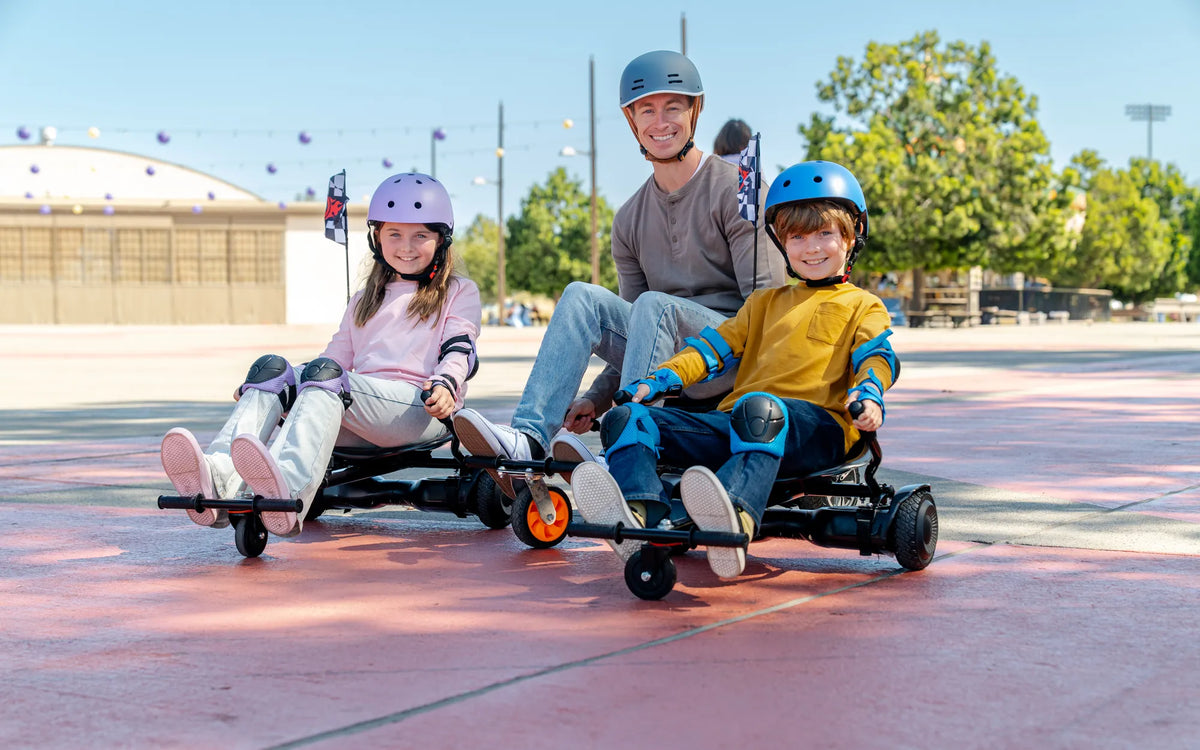
Introduction to Kids' Electric Scooters: More Than Just a Toy
A portable electric scooter for kids is a transformative tool that merges recreation with practical mobility. It represents a significant step towards independence, encouraging outdoor exploration and active play away from digital screens. This guide will help you navigate the crucial balance between exhilarating fun and paramount safety, ensuring you select a scooter that grows with your child. We'll analyze essential features, decode specifications, and establish best practices for riding and maintenance. Leading brands like Gyroor, trusted by over 100,000 riders, exemplify the engineering and safety standards that make this possible.
Modern kids' e-scooters are sophisticated personal transport devices. They are designed to be compact, foldable, and user-friendly, offering a sense of freedom and responsibility. The right model can become a cornerstone of family outings, neighborhood travel, and skill development. Our focus is on providing a factual, evidence-based framework for your decision, moving beyond viewing the scooter as a simple toy to recognizing it as an investment in your child's active lifestyle.
Safety and reliability are non-negotiable. This guide prioritizes these elements by dissecting the components that matter most: from UL-certified battery systems to robust braking and intuitive speed controls. We will reference industry standards and specific features, such as Gyroor's IPX5 water-resistant designs, to give you clear, actionable criteria. The goal is to equip you with the knowledge to make an informed choice that delivers lasting value and peace of mind.
Why Choose a Portable Electric Scooter for Your Child?
Portable electric scooters offer a unique blend of benefits that extend far beyond simple entertainment. They actively promote physical health by getting children outdoors, engaging core muscles, and improving balance and coordination. This form of active play is a compelling alternative to sedentary screen time, fostering a healthier daily routine. The physical engagement required to steer and balance provides subtle but valuable exercise.
These scooters also serve as practical tools for teaching responsibility and basic mobility awareness. Children learn to care for their vehicle through charging, basic inspection, and proper storage. Riding in safe environments introduces foundational concepts of spatial awareness, signaling, and respecting pedestrian spaces. It's a hands-on lesson in personal accountability and safe transit habits that can last a lifetime.
The convenience of a foldable, portable design cannot be overstated. A scooter that quickly collapses and fits into a car trunk enables spontaneous family adventures to parks, trails, or vacation spots. It solves the "last-mile" problem for families on outings and makes storage at home effortless. This portability transforms the scooter from a neighborhood-only device into a versatile companion for various activities.
Finally, a quality electric scooter provides a profound sense of fun and freedom. It allows kids to explore their immediate world with a new perspective, building confidence and independence. The joy of mastering a personal electric vehicle is significant, creating cherished memories and encouraging a love for the outdoors. This combination of health, education, convenience, and pure enjoyment makes a compelling case for ownership.
Essential Safety Features Every Parent Must Look For
Selecting a scooter begins with a rigorous evaluation of its safety engineering. These features are the bedrock of a secure riding experience and should be the primary filter in your decision-making process. Compromising on core safety components to save money is a risk not worth taking. We will break down the critical systems that demand your attention.
High-quality construction is the first line of defense. Look for a frame made from aerospace-grade aluminum alloy, which offers an optimal strength-to-weight ratio. The deck should be wide enough for stable footing and covered with a non-slip surface. A sturdy, telescopic stem with a reliable locking mechanism is essential to prevent folding during use. These elements ensure the scooter can withstand the rigors of daily use without structural failure.
Battery & Electrical Safety (The #1 Priority)
The battery is the most critical safety component. Insist on models featuring UL-certified battery packs, like those used in Gyroor scooters. This certification means the battery has undergone rigorous independent testing for overcharge protection, short-circuit prevention, and thermal stability. Certified batteries drastically reduce the risk of fire hazards, which have been associated with uncertified, off-brand power cells.
Beyond certification, a robust Battery Management System (BMS) is vital. The BMS monitors cell voltage, temperature, and current, ensuring balanced charging and discharging. It prevents over-discharging, which can permanently damage cells. Always use the manufacturer-provided charger and follow charging guidelines—never leave a battery charging unattended overnight. A safe battery is the cornerstone of a trustworthy portable electric scooter for kids.
Reliable Braking Systems
Effective braking is non-negotiable for control and emergency stops. For children, redundancy is key. A dual-brake system, such as a combination of an electronic brake and a mechanical disc or rear fender brake, provides a backup. Electronic brakes offer smooth deceleration, while physical brakes give direct, tactile control. Regenerative braking can also extend battery life by converting kinetic energy back into a small charge.
Test the brakes for responsiveness and modulation. They should engage progressively, not jarringly, to avoid throwing the rider. Teach your child to use both brakes gently and to anticipate stops. In wet conditions, mechanical disc brakes generally offer more consistent performance than electronic-only systems. The presence of a reliable, dual-brake setup is a major indicator of a scooter designed with safety as a priority.
Speed Control and Learning Modes
Adjustable speed limits are essential for matching the scooter's performance to your child's skill level. Look for models with multiple speed modes (e.g., Beginner, Eco, Sport). Beginner mode should cap speed at a safe 5-7 mph, allowing a new rider to build confidence and master balancing and steering without excessive speed.
As skills improve, parents can unlock higher modes with a passcode or app control, ensuring the transition is supervised. This feature allows the portable electric scooter for kids to evolve with the rider, providing years of appropriate use. Speed control is not just a convenience; it's a fundamental tool for risk management during the learning phase and beyond.
Build Quality and Durability
Durability directly impacts long-term safety. A scooter that rattles, bends, or develops play in its joints becomes a hazard. IPX5 water resistance, a standard feature on Gyroor models, is crucial for real-world use. It protects the electrical components from water splashes and light rain, allowing the scooter to safely navigate wet sidewalks or unexpected puddles without internal damage.
Check the quality of welds, the security of bolt connections, and the resilience of the deck coating. Large, air-filled or high-quality honeycomb rubber tires provide better shock absorption and traction on uneven surfaces than small, solid plastic wheels. A durable, well-sealed scooter is a safer scooter that will require less maintenance and provide more reliable performance over time.
Key Specifications: Choosing the Right Model by Age & Use
Matching technical specifications to your child's age, size, and intended use is crucial for safety and satisfaction. This data-driven approach ensures the scooter has adequate power, range, and capacity without being overpowered or intimidating. Use the following guidelines as a framework for comparison when evaluating different models and brands.
Always cross-reference the manufacturer's recommended age range with the physical specifications. A scooter rated for age 8+ but with a weight limit of 120 lbs may be outgrown quickly by a larger child. Consider both current and near-future needs to maximize the product's usable lifespan. The right fit enhances control and safety, making the riding experience more enjoyable and secure.
Motor Power and Speed Ranges
Motor power, measured in watts (W), determines hill-climbing ability and acceleration. For most children, a motor between 100W and 200W is sufficient. Younger riders (ages 6-9) do well with 100-150W motors, providing enough torque for gentle slopes without excessive speed. Older kids and teens (10+) may benefit from 150-250W motors for tackling steeper inclines common in neighborhoods.
Top speed should be appropriately limited. A safe maximum for children under 12 is 10 mph, which can be increased to 12-15 mph for responsible teenagers under supervision. Remember, higher wattage doesn't always mean higher top speed; it often relates to torque. The key is a motor powerful enough to handle your local terrain without struggling, paired with software that enforces a safe speed ceiling.
Battery Life and Real-World Range
Battery capacity is defined by voltage (V) and amp-hours (Ah). Common configurations are 24V/4.0Ah or 36V/5.0Ah. Higher voltage generally means more power, while higher Ah means more capacity. Advertised range (e.g., "up to 12 miles") is an ideal-world figure. Real-world range is affected by rider weight, terrain, temperature, and speed.
A realistic expectation is 40-60% of the maximum claim. For a scooter advertised for 12 miles, expect 6-8 miles of consistent use. This is typically more than enough for neighborhood rides. Teach your child to monitor the battery indicator and return home with a reserve. A battery with a 500+ charge cycle rating, like those from Gyroor, ensures this range is maintained for years with proper care.
Weight Limit and Portability
The scooter's maximum weight limit is a critical safety specification. Choose a model with a limit at least 30-50 lbs above your child's current weight. This provides a safety margin for growth, carrying a backpack, and ensures the scooter's frame and motor are not overstressed. Exceeding the weight limit can damage the scooter and lead to premature failure of components like the motor or stem.
True portability is defined by the foldability mechanism and final dimensions. A good folding system is quick, requires minimal force, and locks securely in both the open and closed positions. Check the folded size: it should fit easily in your car's trunk. The scooter's own weight also matters; a 20-25 lb scooter is manageable for most adults and older children to carry short distances.
Comparison of Key Specifications by Age Group
| Age Group | Recommended Motor Power | Safe Speed Range | Typical Weight Limit | Ideal Wheel Type |
|---|---|---|---|---|
| 6-9 Years | 100W - 150W | 5 - 8 mph (with beginner mode) | 120 - 150 lbs | 5.5" - 6.5" Honeycomb Rubber |
| 10-12 Years | 150W - 200W | 8 - 12 mph (with mode control) | 150 - 180 lbs | 6.5" - 8" Air-Filled or Rubber |
| 13+ Years | 200W - 250W | 10 - 15 mph (supervised) | 180 - 220 lbs | 8"+ Air-Filled Tires |
The Parent's Checklist: Before, During, and After the Ride
Proactive supervision and routine maintenance are as important as choosing a safe scooter. Establishing clear protocols ensures consistent safety and helps extend the lifespan of the vehicle. This checklist provides a practical, step-by-step action plan for parents to implement from day one.
Consistency is key. Making these checks and rules a habitual part of the riding experience ingrains safe practices in your child and gives you ongoing peace of mind. Treating the scooter with respect and care from the outset prevents minor issues from becoming major hazards or repair bills.
Pre-Ride Preparation: Gear and Inspection
Before every ride, enforce a mandatory gear protocol. This includes a properly fitted CPSC-certified bicycle helmet, knee pads, elbow pads, and closed-toe shoes with good grip. Wrist guards are also highly recommended. This gear is non-negotiable, regardless of the ride's perceived simplicity or duration.
Conduct a quick 60-second scooter inspection. Check that the stem is fully extended and securely locked. Squeeze the brake levers to ensure they engage firmly. Visually inspect the tires for proper inflation or signs of wear/deflation. Ensure the throttle moves smoothly and returns to the off position. Look for any new loose bolts, rattles, or damage to the frame. This pre-flight check is a critical habit.
Safe Riding Practices and Rules
Establish and enforce clear riding boundaries. Designate approved areas such as park paths, empty parking lots, or sidewalks where local laws permit. Strictly prohibit riding on public roads, at night without integrated lights, or in wet conditions unless the scooter has a verified water-resistant rating like IPX5. Adult supervision is mandatory for younger or less experienced riders.
Teach fundamental riding rules: always keep both hands on the handlebars, maintain a safe distance from pedestrians and obstacles, use hand signals for turning, and walk the scooter across streets. Instruct your child to avoid sudden acceleration or braking and to be hyper-aware of driveways and curbs. Practice these skills together in a controlled environment before granting more independence.
Maintenance and Long-Term Care
Regular maintenance preserves safety and performance. Adhere to proper charging: avoid draining the battery completely and don't leave it on the charger after it's full. Store the scooter in a cool, dry place, away from extreme temperatures. Every few weeks, check and tighten all bolts and fasteners using the provided tools.
Keep tires properly inflated to the PSI indicated on the sidewall. Clean the scooter with a damp cloth; avoid high-pressure hoses. Familiarize yourself with the terms of the manufacturer's warranty—a comprehensive 1-year warranty, like Gyroor's, covers defects in materials and workmanship, providing significant long-term security. Proper care maximizes the fun and longevity of your portable electric scooter for kids.
FAQs: Your Top Questions About Kids' E-Scooters, Answered
Q1: What is the right age for a child to start using an electric scooter?
Most manufacturers recommend ages 8 and up, as children typically have the necessary coordination, balance, and cognitive ability to follow safety rules at this stage. However, maturity varies. A very coordinated 7-year-old with close supervision may be ready, while some 9-year-olds might need more time. Always base the decision on your child's individual responsibility and physical ability, not just age.
Q2: Are electric scooters safe for complete beginners?
Yes, when selected and used correctly. The key is starting with a model that has a dedicated beginner speed mode (capped at ~5-7 mph), paired with full protective gear and practice in a wide-open, car-free area like an empty tennis court or basketball court. Parental supervision during the initial learning phase is essential to instill good habits and build confidence slowly and safely.
Q3: How long does the battery last on a single charge, and how should I charge it safely?
Real-world range is typically 6-12 miles depending on factors like weight and terrain. To charge safely, always use the manufacturer-provided charger. Plug the charger into the wall before connecting it to the scooter. Charge in a well-ventilated area on a non-flammable surface, and do not leave it charging unattended for extended periods or overnight. A full charge usually takes 3-5 hours.
Q4: What happens if the scooter breaks or has a problem?
This highlights the importance of purchasing from a reputable brand with strong customer support. Companies like Gyroor offer a 1-year warranty that covers defects. Before buying, review the warranty terms and check the availability of replacement parts (e.g., tires, brake pads). Good brands provide accessible, US-based customer service to help troubleshoot issues and facilitate repairs.
Q5: Can a kids' electric scooter handle hills or rough pavement?
Performance on hills depends on motor power and rider weight. A 150W+ motor can handle mild slopes. For consistently hilly areas, consider a 200W+ motor. Rough pavement is best tackled with larger, air-filled tires (8"+) which provide better shock absorption than small, solid wheels. Always check the scooter's specifications for its hill-climbing grade (e.g., 10-15%) to gauge its capability for your local environment.
Conclusion: Investing in Fun, Freedom, and Safety
Choosing the right portable electric scooter for kids is a decision that prioritizes your child's joy and security. By focusing on certified safety features like UL-approved batteries, reliable dual braking, and adjustable speed controls, you build a foundation for worry-free adventures. Matching motor power, battery range, and weight capacity to your child's profile ensures the scooter is a perfect fit, both today and for the coming years.
The investment extends beyond the product itself. It is an investment in encouraging outdoor activity, teaching responsibility, and creating family memories. Establishing clear riding rules and maintenance routines empowers your child to enjoy their new freedom safely. A scooter from a trusted brand with a robust warranty provides the ultimate peace of mind, knowing that engineering excellence and customer support stand behind the product.
Ready to explore models that combine thrilling performance with top-tier safety engineering? Browse the full Gyroor collection at gyruorboard.com to discover UL-certified, IPX5 water-resistant scooters designed for durability and fun, backed by a reliable 1-year warranty and the trust of over 100,000 riders.
Wheeled Electric Scooter for Kids: The Ultimate Guide for Parents
Can You Ride a Hoverboard in the Airport? The Definitive Guide to Rules & Risks