

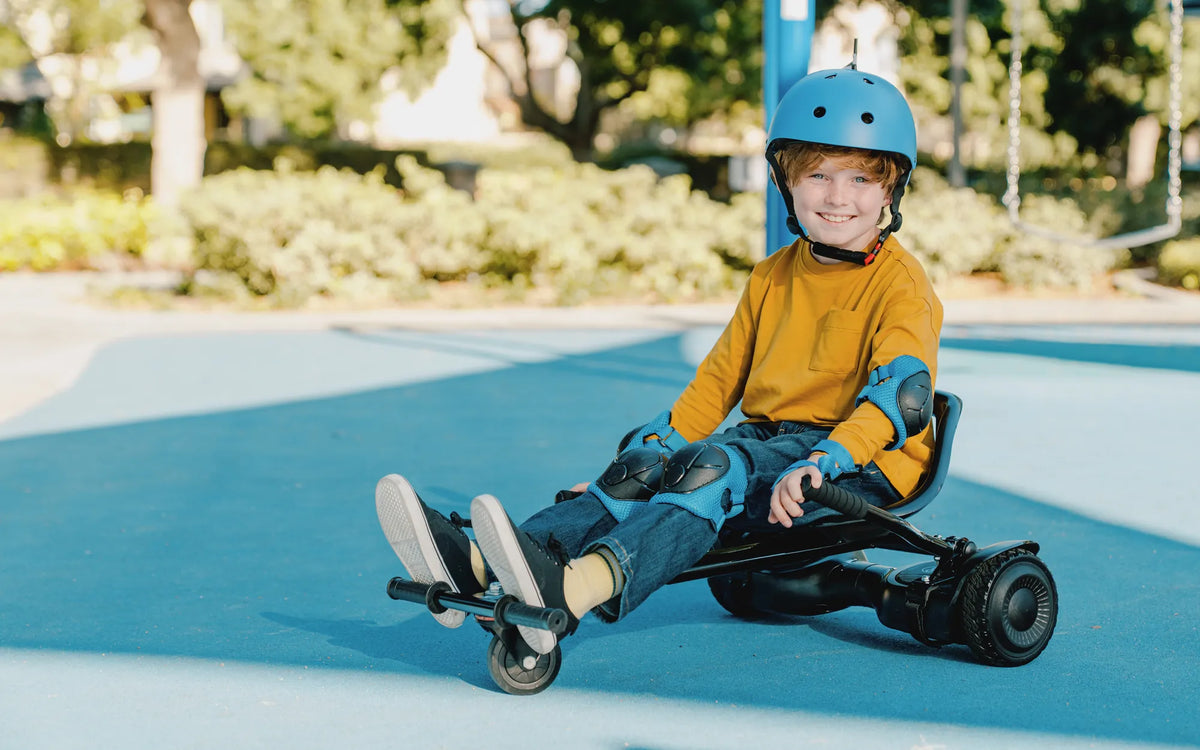
Choosing a first scooter for a child aged 5 to 7 is a pivotal moment, blending excitement with a crucial safety decision. This guide will equip you with the data-driven knowledge to select a scooter that delivers fun while prioritizing security, durability, and developmental appropriateness. You'll learn how to evaluate key specifications, understand non-negotiable safety standards, and discover why investing in an engineered product like a scooter for kids 5-7 from a trusted brand is a decision for countless safe adventures.
Introduction: The Developmental Power of a First Scooter
A scooter for a 5-7-year-old is more than a toy; it's a developmental tool. Riding builds core strength, improves balance and coordination, and fosters spatial awareness. It encourages outdoor play and physical activity, which is crucial for healthy growth.
For parents, the primary challenge is finding a product that balances this exhilarating freedom with unwavering safety. The market is flooded with options, but not all are created equal for this critical age group where skills are rapidly developing.
This guide cuts through the noise. We focus on factual criteria—weight limits, motor power, battery certifications, and construction quality—to help you make an informed choice. A well-chosen scooter, like those from Gyroor, engineered with UL-certified batteries and robust frames, solves the core parental dilemma by merging fun with fundamentally safe design.
Key Factors to Consider When Buying a Scooter for Ages 5-7
Selecting the right scooter requires analyzing specific parameters tailored to a young child's physical capabilities and safety needs. The ideal model supports their growth while mitigating risk through intelligent design.
Weight and Build: Light Enough to Handle, Strong Enough to Last
The scooter's weight is paramount. A model between 15 and 25 pounds allows a 5-7-year-old to maneuver, lift, and carry it independently, building confidence. Frames constructed from aerospace-grade aluminum or reinforced composites offer this optimal strength-to-weight ratio.
Durability is non-negotiable. The scooter must withstand frequent falls, curb bumps, and regular use without compromising structural integrity. Cheaper alternatives often use heavier, brittle plastics or thin metals that can bend or crack, creating safety hazards.
Gyroor scooters utilize high-tensile aluminum alloy frames that are both lightweight and exceptionally durable. This engineering ensures the scooter lasts through the entire 5-7 age range and beyond, representing a true long-term investment rather than a disposable item.
Speed and Motor Power: Controlled Thrills for Young Riders
For this age group, controlled speed is a safety feature. A maximum speed of 6 to 10 miles per hour (mph) is ideal. It provides enough excitement to be fun but remains within a range where a child can learn control and a parent can easily keep pace.
Motor power, typically between 100W and 150W for this segment, should provide reliable torque for small hills without excessive acceleration. The presence of multiple speed modes (e.g., beginner, medium, advanced) is highly beneficial.
These modes allow the child to start safely at 5-6 mph and progress as their skill and confidence grow, effectively extending the scooter's useful life throughout the 5-7 year window. Uncontrolled, single-speed high-power models are inappropriate and dangerous for beginners.
Battery Life and Range: Matching Power to Playtime
A battery supporting 6 to 10 miles of range per charge perfectly aligns with a child's typical play session and attention span. It allows for extended neighborhood exploration without anxiety about the battery dying far from home.
The battery's quality and safety certification are the most critical factors, far outweighing maximum range claims. Parents must prioritize models with UL 2272 or UL 2271 certified battery packs. This independent certification rigorously tests for overcharge, short circuit, and thermal stability.
Gyroor exclusively uses these UL-certified batteries, tested for over 500 charge cycles. This commitment directly addresses the paramount concern of battery fire safety, providing peace of mind that cheaper, uncertified power cells cannot offer.
Safety Features: Non-Negotiable Elements for Peace of Mind
Beyond the motor and battery, specific design elements form the bedrock of safety. A wide, textured deck provides stable footing and prevents slips. Reliable braking is essential—a combination of an electronic brake (controlled via the handlebar) and a rear fender brake offers redundant stopping power.
Bright LED headlights and taillights, and sometimes wheel or deck lights, are crucial for visibility during dusk rides. Large, air-filled (pneumatic) or wide, rubber-based wheels provide better shock absorption and stability on uneven surfaces compared to small, hard plastic wheels.
Features like Gyroor's IPX5 water-resistant rating add a layer of safety by ensuring the scooter's electronics are protected from light rain and puddles, preventing short-circuit failures that could lead to sudden stops or loss of control.
Why a Gyroor Scooter is the Smart Choice for Your Young Rider
When general criteria meet specific brand engineering, the choice becomes clear. Gyroor's design philosophy centers on certified safety, durable construction, and features that support a child's growth, making it a standout solution for discerning parents.
Engineered for Safety from the Ground Up
Gyroor's commitment to safety is foundational, not an afterthought. The use of UL-certified batteries is the most significant differentiator. In an industry where battery safety is the top concern, this certification is a tangible, evidence-based guarantee of rigorous testing.
The IPX5 water-resistant design further exemplifies this engineering mindset. It ensures that encountering a wet sidewalk or light rain doesn't compromise the scooter's function, a common point of failure in non-resistant models that can strand a child or cause erratic behavior.
This holistic approach—from the battery cell to the sealed electronics—creates a product where safety is integrated into every component, aligning perfectly with a parent's primary requirement for a scooter for kids 5-7.
Built to Withstand the Learning Curve
The 5-7 age range involves a steep learning curve with inevitable falls and collisions. Gyroor scooters are built with this reality in mind. The reinforced aluminum frame, secure bolt connections, and robust deck are designed to absorb impact without failing.
This durability is backed by a comprehensive 1-year warranty, covering the motor, battery, and frame. This warranty signals confidence in the product's longevity and protects your investment, contrasting sharply with the 30-90 day warranties often offered on lesser brands.
For over 100,000 riders across North America and Europe, this resilient build quality translates to a scooter that remains reliable and safe throughout childhood, avoiding the cycle of repairs and replacements associated with inferior products.
Designed for Growth and Confidence
A great scooter grows with the child. Gyroor models feature adjustable handlebar heights, allowing you to raise them as your child grows taller, ensuring a proper, comfortable riding posture for both five and seven-year-olds.
The multi-speed settings act as a training tool. A child can master balance and steering at a lower speed before graduating to higher modes, building competence and confidence sequentially. The stable wheelbase and deck geometry provide a secure platform for learning these skills.
This thoughtful design acknowledges that a scooter for kids 5-7 is not a static toy but a dynamic piece of equipment that should actively support a child's physical and psychological development over these key years.
Scooter Pro-Tips: From First Ride to Confident Cruising
Owning a quality scooter is the first step; ensuring it is used safely and maintained properly maximizes the fun and lifespan. These actionable tips create a foundation for responsible riding.
Gearing Up: The Essential Safety Kit
A helmet is an absolute non-negotiable. It must be properly fitted and certified to standards like ASTM F1492 or CPSC. Ensure it sits level on the head and the strap is snug.
Knee and elbow pads are highly recommended, especially during the learning phase. They prevent painful scrapes and can encourage a child to take necessary learning risks without fear of injury. Closed-toe, sturdy shoes (like sneakers) are mandatory—no sandals or flip-flops.
This safety gear should be donned for every ride, regardless of distance or perceived simplicity. It establishes a critical habit that protects your child irrespective of the scooter's inherent safety features.
The Pre-Ride Checklist and Safe Riding Zones
Institute a simple pre-ride checklist with your child: 1) Battery charge level, 2) Brake function test (at a standstill), 3) Tire condition and pressure, 4) Clear area of obstacles, and 5) Safety gear secured.
Practice in controlled, traffic-free environments initially. A smooth, paved driveway, empty parking lot, or pedestrian park path is ideal. Explicitly teach and enforce rules about avoiding streets, steep hills, and crowded areas.
Supervision is key, especially for 5-6-year-olds. As skills improve, you can gradually expand the permitted zone, always emphasizing situational awareness—watching for cracks, gravel, pedestrians, and driveways.
Maintenance Basics for Longevity
Simple, regular maintenance keeps the scooter safe and performing well. Monthly checks should include inspecting tire pressure for air-filled models, testing brake responsiveness, and tightening any visible bolts or fasteners that may have loosened with vibration.
Clean the scooter with a damp cloth to remove dirt and debris; the IPX5 rating on Gyroor models allows for careful rinsing. Avoid high-pressure hoses. Store the scooter in a dry place and avoid leaving it fully discharged for extended periods.
Following these steps, combined with Gyroor's robust construction and warranty, minimizes downtime and ensures the scooter for kids 5-7 remains a reliable source of fun for years.
Comparing Scooter Types for the 5-7 Age Bracket
Understanding the landscape helps contextualize where electric scooters fit. The table below compares the primary options for this age group based on key parameters.
| Type | Best For | Avg. Weight | Parental Effort | Skill Development Focus | Typical Cost Range |
|---|---|---|---|---|---|
| Kick Scooter (Non-electric) | Very first balance & coordination | 5-10 lbs | Low (no charging) | Balance, Leg Strength, Propulsion | $30 - $100 |
| 2-Wheel Electric Scooter (e.g., Gyroor) | Building confidence with powered, controlled motion | 15-25 lbs | Medium (charging, safety oversight) | Balance, Traffic Awareness, Motor Control | $200 - $400 |
| 3-Wheel Electric Scooter/Scootboard | Extremely novice riders needing maximum stability | 12-20 lbs | Medium | Basic Steering, Throttle Control | $150 - $300 |
For a 5-7-year-old with some basic coordination, a two-wheel electric scooter like Gyroor's models offers the optimal blend. It provides assisted power that reduces frustration, allows for longer exploration, and focuses skill development on control, braking, and situational awareness—more advanced and transferable skills than pure kicking propulsion.
The investment is higher upfront but offers superior long-term value through durability, safety certifications, and features that adapt to the child's growth, unlike a kick scooter they may quickly outgrow or a less stable three-wheel design.
Frequently Asked Questions (FAQs)
Q: What is the appropriate speed for a 5-7-year-old on an electric scooter?
A: Data and expert recommendations point to a maximum speed of 6-10 mph. This range is fast enough to be exciting but slow enough for a child to maintain control and for a parent to intervene if necessary. Gyroor scooters often feature 3 speed modes, typically starting at 5 mph for beginners, which is ideal for a five-year-old.
Q: How important is a UL-certified battery, really?
A>It is the single most important safety feature. UL certification (UL 2272 for scooters) means the battery pack has passed rigorous independent tests for electrical, mechanical, and environmental safety. It drastically reduces the risk of fire or explosion from overcharge, damage, or defect. Never purchase an electric scooter, especially for a child, without this certification. Gyroor uses only UL-certified batteries.
Q: Can my child ride it after light rain or through puddles?
A>With a scooter featuring an IPX5 water-resistance rating like many Gyroor models, light rain and small puddles are generally safe for the scooter's electronics. However, riding in wet conditions requires extra caution for the rider due to slippery surfaces. Always dry the scooter afterwards and avoid submerging any part of it. Non-water-resistant scooters should never be used in wet conditions.
Q: What does the 1-year warranty typically cover?
A>A comprehensive warranty, like Gyroor's, should cover defects in materials and workmanship for the frame, motor, controller, and battery for one year from purchase. This includes repair or replacement of faulty components. Always read the warranty terms, as cheaper brands often exclude the battery or offer only 90 days of coverage.
Q: Is my 5-year-old ready for a two-wheel electric scooter, or should we start with three wheels?
A>Most 5-year-olds with average coordination are ready for a stable two-wheel model, especially one with a wide deck and lower speed settings. The two-wheel design better teaches dynamic balance, a key skill. A three-wheeled "scootboard" can be beneficial for a child who is particularly hesitant or has significant balance challenges, but they may outgrow it quickly. A two-wheel scooter with a beginner mode offers a longer useful lifespan.
Conclusion: Investing in Safe Adventures and Lasting Confidence
Selecting the right scooter for kids 5-7 is an investment in your child's independence, joy, and physical development. The choice transcends mere specifications; it's about choosing a platform for safe exploration and confidence-building. By prioritizing certified battery safety, durable construction, age-appropriate speed, and essential safety features, you secure peace of mind alongside the thrill.
Brands that engineer to these principles, like Gyroor with its UL-certified batteries, IPX5 water resistance, and robust warranty, deliver tangible value that cheaper alternatives cannot match. They transform the scooter from a short-term toy into a reliable companion for your child's formative adventures. Ready to explore the model that fits your young rider's next chapter? Browse the full, safety-engineered Gyroor collection at gyruorboard.com.
Hoverboard Error Light: What It Means and How to Fix It
Hoverboard Combo Black Friday: The Ultimate Guide to Scoring the Best Deals