

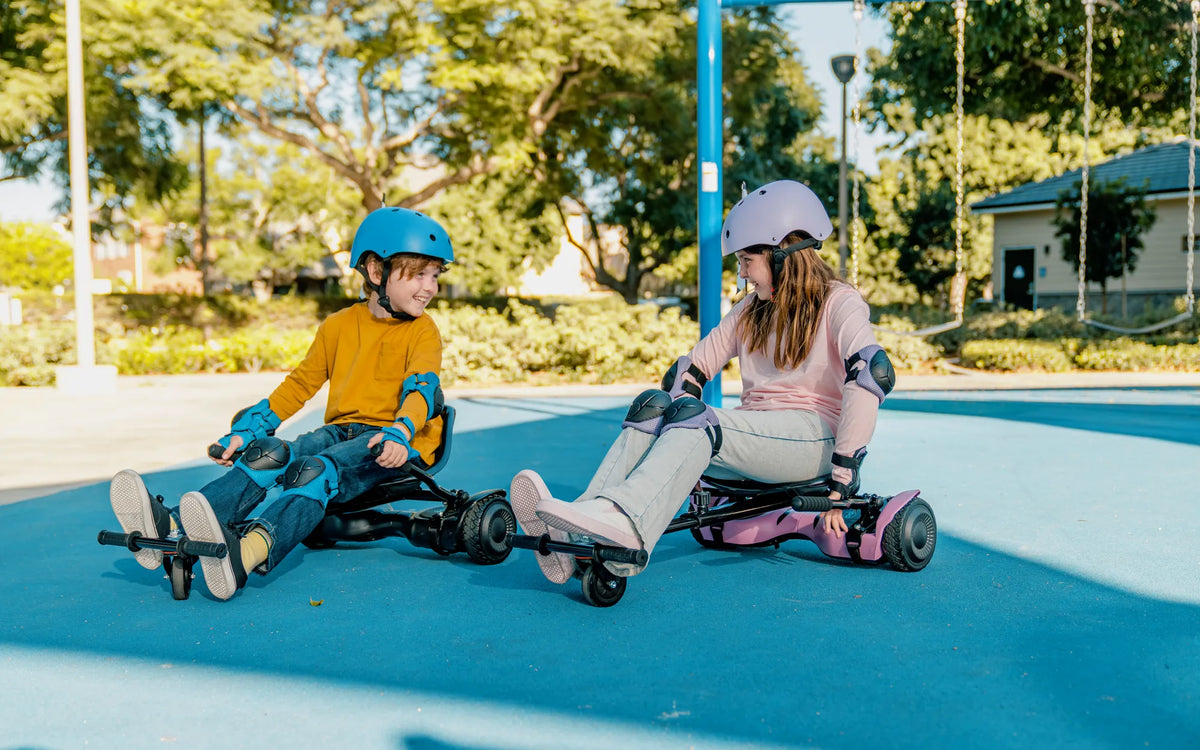
Why an Electric Scooter is a Great Choice for Your 8-Year-Old
An electric scooter for kids age 8 represents a significant milestone in childhood mobility and independence. At this age, children have developed the necessary coordination and judgment to handle a motorized vehicle under close supervision, making it an ideal time to upgrade from foot-powered or toddler models. The right scooter encourages outdoor physical activity, improves balance, and fosters a sense of responsibility.
This guide is designed to cut through the marketing noise and provide parents with a factual, safety-first framework for selection. We will analyze critical safety features, decode technical specifications into practical terms, and outline essential riding habits. Our goal is to ensure your child's adventure is built on a foundation of security and quality engineering from trusted brands.
Key Safety Features Every Parent Must Look For
Safety is the non-negotiable cornerstone of choosing any youth vehicle. For an 8-year-old, specific engineering controls are paramount to prevent accidents and build riding confidence. Prioritizing these features over superficial aesthetics or extreme speed is the single most important decision a parent can make.
A quality electric scooter for kids age 8 should integrate multiple layers of protection. This includes electronic speed limiting, redundant braking systems, and a stable physical design. These elements work together to create a forgiving riding experience suitable for a young learner's developing skills.
Speed Control and Modes
Adjustable speed modes are essential. A beginner mode, typically capped at 5-7 mph, allows a child to master steering and braking in a controlled environment. A mid-speed mode (8-10 mph) offers progression, while a parental control lock, often via a key or PIN, is crucial to prevent unauthorized access to higher speeds.
This graduated system aligns with skill development. Brands like Gyroor incorporate these modes alongside smooth acceleration curves to prevent jarring starts that can cause loss of control. The ability to lock the top speed provides lasting peace of mind as your child's competence grows.
Braking Systems: Which is Safest?
Effective stopping power is critical. The safest setups for children employ dual or triple braking systems for redundancy. Common types include electronic (e-brake), disc, and foot (fender) brakes.
- Electronic Brake (E-brake): Engages the motor to slow the scooter, often controlled via the throttle lever. It's intuitive but should not be the sole brake.
- Disc Brake: Provides strong, reliable stopping power, similar to bicycles. It requires minimal hand pressure, which is good for small hands.
- Foot Brake: A passive brake applied by stepping on the rear fender. It's a reliable mechanical backup if electronic systems fail.
For an 8-year-old, a combination of an electronic brake and a foot brake is highly recommended. This ensures the child has both an easy, hand-controlled option and a fail-safe mechanical backup.
Stable Design and Lighting
Stability is dictated by wheel size, deck width, and frame geometry. Wheels should be at least 8 inches in diameter, with air-filled (pneumatic) or high-quality rubber tires to absorb bumps and improve traction. A wide, textured deck provides secure footing.
Integrated lighting is a mandatory safety feature, not an accessory. Bright LED headlights and taillights ensure visibility during dusk rides. Reflective stickers or strips on the deck and stem add another layer of visibility to alert drivers and pedestrians.
Choosing the Right Model: A Parent's Checklist
With safety fundamentals established, use this actionable checklist to evaluate specific models. This turns abstract features into practical decision-making criteria tailored for an 8-year-old rider.
Each point addresses a common parental concern, from longevity and performance to daily usability. Cross-referencing potential scooters against this list will quickly highlight the best options for your family's needs.
Weight Limit and Scooter Weight
Always check the manufacturer's stated maximum weight limit. For a typical 8-year-old, a limit of 120-150 lbs provides a safe buffer for growth and ensures the frame and motor are not overstressed. Exceeding this limit compromises safety and performance.
Conversely, the scooter's own weight matters for portability. A model weighing 20-30 lbs is heavy enough to feel stable but light enough for a parent to carry if needed. Aluminum alloy frames offer the best strength-to-weight ratio.
Battery Life and Range Per Charge
Battery specifications directly impact fun. Look for a battery capacity of at least 5Ah (Amp-hours). This typically translates to a real-world range of 7-10 miles per charge, which is ample for neighborhood adventures.
Most critically, insist on a UL-certified battery pack. This independent certification, a standard feature across Gyroor's lineup, verifies the battery has passed rigorous safety tests for overcharge protection, short-circuit prevention, and durability over 500+ charge cycles. It is the benchmark for fire and failure risk reduction.
Durability and Weather Resistance
An electric scooter for kids age 8 must withstand rough handling. A solid aluminum frame, secure bolt construction, and sealed wiring are indicators of quality. The scooter should feel robust, not flimsy.
Weather resistance is crucial for real-world use. An IPX5 rating means the scooter can withstand water jets from any direction, protecting it from puddles, wet pavement, and light rain. This feature, standard on Gyroor models, significantly extends the scooter's lifespan and reliability.
Top Considerations for Learning and Riding
Ownership extends beyond the purchase. Setting up your child for success involves proper fitting, mandatory safety gear, and foundational riding lessons. This proactive approach builds confidence and establishes safe habits from day one.
Finding the Perfect Fit: Adjustable Handlebars
Proper ergonomics are vital for control. The handlebars should adjust easily to a height between the child's waist and lower chest when standing on the deck. This allows for a comfortable, slightly bent elbow position, ensuring precise steering without strain.
Look for a tool-free adjustment mechanism, such as a quick-release lever. This allows for easy adaptation as your child grows, often extending the scooter's useful life by 1-2 years, making it a key feature for an 8-year-old.
Essential Safety Gear (Beyond the Scooter)
The scooter's safety features are secondary to personal protective equipment (PPE). This gear is non-negotiable for every ride.
- Helmet: Must be CPSC certified and fit snugly. It is the single most important piece of safety equipment.
- Knee and Elbow Pads: Protect against the most common falls and scrapes.
- Wrist Guards: Highly recommended to prevent fractures.
- Closed-Toe Shoes: Sturdy footwear is essential for safe footing and protection.
Making gear a non-debatable part of the "riding uniform" instills a lifelong safety mindset.
Teaching Your Child Safe Riding Habits
Begin in a controlled, car-free environment like an empty parking lot or smooth driveway. Practice starting, stopping, and gentle turning until these actions become second nature.
Establish clear, non-negotiable rules: always ride on sidewalks or bike paths where permitted and legal, never on roads; come to a complete stop at every driveway and intersection; be hyper-aware of pedestrians, dogs, and obstacles; and never ride after dark or in inclement weather. Consistent reinforcement of these rules is key.
Maintenance, Warranty, and Peace of Mind
Long-term satisfaction depends on the scooter's reliability and the support behind it. A minimal maintenance routine and a strong warranty are the foundations of parental peace of mind over the product's lifespan.
Routine Checks Before Each Ride
A quick 60-second pre-ride inspection can prevent most accidents. Teach your child to participate in this checklist:
- Tires: Check for proper inflation and any visible damage.
- Brakes: Test both braking systems for responsiveness.
- Fasteners: Ensure all bolts (especially on the stem and handlebars) are tight.
- Battery: Confirm adequate charge for the planned ride.
This ritual reinforces responsibility and ensures the scooter is in safe operating condition.
Understanding Your Warranty and Support
A comprehensive warranty is a sign of manufacturer confidence. Look for at least a 1-year warranty on the frame, motor, and battery. This protects against defects in materials and workmanship.
Accessible customer support is equally important. Brands like Gyroor, trusted by over 100,000 riders, provide U.S.-based support for troubleshooting and genuine parts, ensuring you're not left stranded if an issue arises.
Model Comparison and Key Specifications
This table compares key specifications parents should evaluate when selecting an electric scooter for kids age 8. Use it as a baseline for comparing features across different brands and models.
| Feature | Minimum Recommended | Ideal Specification | Why It Matters |
|---|---|---|---|
| Top Speed (Beginner Mode) | ≤ 7 mph | 5-7 mph with PIN lock | Controlled learning environment |
| Braking System | Dual system | E-brake + Foot brake | Redundant safety, intuitive use |
| Wheel Size | 8 inches | 8.5-10 inch pneumatic | Stability and shock absorption |
| Max Weight Limit | 120 lbs | 150 lbs+ | Safety buffer for growth |
| Battery Certification | UL, CE, or RoHS | UL-Certified | Gold standard for fire safety |
| Weather Resistance | IPX4 | IPX5 or higher | Protection from puddles & spray |
| Warranty | 6 months | 1 year comprehensive | Manufacturer confidence & support |
Frequently Asked Questions (FAQs) for Parents
What is a safe top speed for an 8-year-old?
A safe maximum operational speed is 10 mph, with a beginner mode limited to 5-7 mph. Parental control locks are essential to prevent unsupervised access to higher speeds. Control is more important than raw speed for this age group.
How long does the battery take to charge?
Charging time varies by battery capacity. A standard 5Ah battery typically takes 4-6 hours for a full charge from empty. Always use the manufacturer-provided charger and avoid leaving the scooter plugged in indefinitely to preserve battery health.
Can my child ride it to school?
This depends entirely on local ordinances, school district policies, and the safety of the route. If permitted, the route must avoid major roads, and the child must demonstrate impeccable safety habits and situational awareness. Always check with your school first.
Is assembly difficult?
Most quality scooters require minimal assembly—often just attaching the handlebars to the stem and tightening a few bolts with provided tools. This process usually takes 10-15 minutes. Comprehensive instructions and customer support should be available if needed.
What if we have a problem with the scooter?
Reputable brands offer clear warranty support and accessible customer service. For example, Gyroor provides a 1-year warranty and U.S.-based support for troubleshooting and parts. Review the warranty terms and support channels before purchasing.
Empowering Adventure with Confidence
Selecting the right electric scooter for your 8-year-old is an exercise in balanced judgment. It requires prioritizing certified safety features like speed controls and UL-certified batteries over sheer power, choosing a durable model with an IPX5 rating for real-world use, and committing to full safety gear and clear riding rules. This comprehensive approach transforms a fun toy into a tool for responsible outdoor exploration.
The goal is to empower your child's independence while anchoring it in security. By focusing on the engineering and safety principles outlined in this guide, you can make a confident choice that delivers lasting value and endless adventure. For a range of youth models built with these parent-first priorities, including UL-certified batteries and robust 1-year warranties, browse the full Gyroor collection at gyruorboard.com.
How to Keep Your Hoverboard from Exploding: Essential Safety Guide
Electric Scooter for Kids Age 5: The Ultimate Guide for Parents