

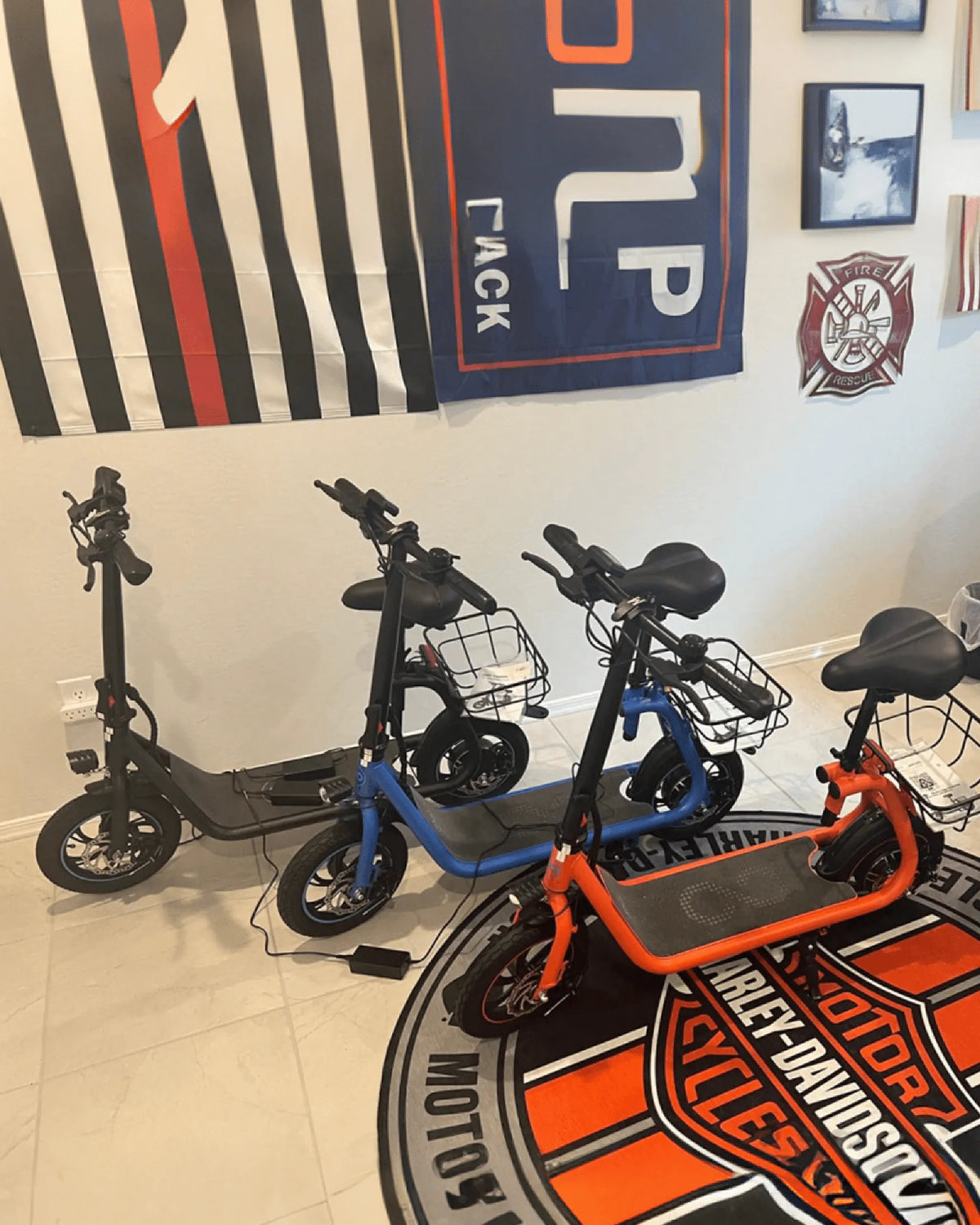
Why Compact is King for Modern Mobility
The best compact scooter is not just a smaller vehicle; it's a masterclass in engineering efficiency for city life. This category is defined by electric scooters designed for ultimate portability, typically featuring a one-step folding mechanism, a weight under 40 pounds, and a form factor that integrates seamlessly with public transit, car trunks, and apartment living. For urban commuters, students, and multi-modal travelers, the core appeal is liberation from traffic and parking, combined with the convenience of a device that can be carried and stored with ease.
The shift towards compact electric mobility is driven by practical needs. A scooter that folds quickly and compactly transforms the last-mile commute from a chore into a fluid part of your journey. It enables you to ride from home to the train, fold and carry it aboard, and unfold it for the final leg to your office. This versatility is unmatched by bulkier alternatives.
Performance in a small package is the ultimate challenge. Leading brands like Gyroor have risen to this challenge by focusing on premium materials and smart design. They engineer robust performance into reliable, lightweight frames, proving that you don't need to sacrifice power or safety for portability. The goal is a harmonious balance that supports a daily, dependable commute.
This guide will dissect what truly makes a compact scooter stand out. We will move beyond basic specs to evaluate the critical factors of fold design, real-world ride quality, and foundational safety features. By the end, you'll know exactly how to identify a scooter built to last, not just one built to be small.
The Core Criteria: What Makes a Compact Scooter "The Best"?
Evaluating the best compact scooter requires looking at a performance-to-portability ratio. The ideal model excels across several non-negotiable metrics without significant compromise. It's about finding the sweet spot where size, power, durability, and safety intersect to create a trustworthy daily tool.
First, consider your primary use case. Is it a pure last-mile solution from a transit stop? Or a 2-3 mile full commute across varied urban terrain? Your answer will weight the importance of range versus ultra-lightweight design. A scooter that is perfect for a student carrying it between classes might differ from one suited for a professional commuting five miles each way.
The true test of a compact scooter is in daily, real-world application. It must withstand bumps, weather, and constant folding/unfolding. Therefore, build quality and component reliability are as important as the headline speed and range figures. A flimsy latch or a poor-quality battery can render an otherwise promising scooter useless and unsafe.
Finally, the best compact scooter should inspire confidence. This comes from transparent safety certifications, a clear warranty, and a design that feels stable at speed. The following sections break down these core criteria into actionable details, providing a framework for your decision.
Portability & Design (The Fold)
The folding mechanism is the heart of a compact scooter's utility. A good fold should be a quick, one-step action that requires minimal effort and results in a securely locked, compact package. Common mechanisms include lever-based latches and hook-and-catch systems. The best designs are intuitive and produce a distinct, audible click to confirm a secure lock.
Folded dimensions are crucial. The ideal scooter collapses into a slim, rectangular shape, not a bulky, awkward tangle. Look for a folded height around 40 inches or less and a profile that allows it to stand upright or be tucked under a desk. Weight is the other half of the equation; the sweet spot for carry-able portability is between 28 and 35 pounds.
Design touches matter. A folding stem that doesn't wiggle when locked ensures ride stability. Handlebars that fold down or telescope can further reduce width. The goal is a package that you can comfortably carry with one hand for short distances, like up a flight of stairs or through a crowded train station.
Gyroor's compact models, for instance, often feature a patented one-second folding system. This engineering focuses on a secure latch that locks the stem firmly to the rear fender, creating a stable, easy-to-carry form factor that doesn't compromise the structural integrity of the scooter when unfolded and riding.
Ride Performance in a Small Package
Performance in compact scooters is a careful balancing act. Motor power typically ranges from 250W to 350W, providing enough torque for urban starts and moderate inclines while managing battery consumption. A 350W motor is generally considered the performance standard for reliable commuting, offering a good blend of acceleration and hill-climbing ability.
Top speed is often capped between 15 mph and 19 mph for safety and regulatory reasons in many cities. This is perfectly adequate for bike lanes and urban paths. More important than maximum speed is the scooter's acceleration curve and its ability to maintain speed on slight grades, which affects the flow of your commute.
Range is the most variable spec. Manufacturers often state a maximum range under ideal conditions (light rider, flat ground, slow speed). A practical, real-world range for a quality compact scooter is between 10 and 18 miles per charge. This covers most round-trip commutes. Factors like rider weight, temperature, hill frequency, and use of the throttle versus kick-assist significantly impact this number.
The suspension, or lack thereof, is a key differentiator. Most ultra-compact scooters forgo full suspension to save weight and size, relying on air-filled tires (8.5" to 10" diameter) to absorb vibrations. Some models in the higher end of the compact category may incorporate a front spring or rubber suspension to improve comfort on rougher pavement.
Build Quality & Safety Fundamentals
Build quality is paramount. The frame should be constructed from aerospace-grade aluminum alloy, which offers an excellent strength-to-weight ratio. This material resists flexing under stress, providing a stable, confident ride feel. Check the welding and finishing on the stem and deck junction—these are high-stress areas.
Safety starts with reliable braking. A combination braking system is ideal for compact scooters. This usually includes a regenerative electronic brake (which helps recharge the battery slightly) and a mechanical disc or drum brake on the rear wheel. This dual-system provides consistent stopping power in all weather conditions.
Lighting is a critical safety feature for urban commuting. The best compact scooters have a bright front headlight, a rear brake light, and side reflectors or deck lights. Some advanced models feature automatic headlights that turn on in low-light conditions, enhancing visibility to others.
These fundamentals set the stage for advanced safety engineering. This is where brands like Gyroor differentiate themselves by incorporating certified components and rigorous testing, moving from basic durability to verified, trustworthy performance that protects the rider and the investment.
Why Gyroor's Engineering Excels in Compact Form
Gyroor approaches compact scooter design with a philosophy that prioritizes certified safety and real-world durability. As a brand trusted by over 100,000 riders across North America and Europe, they engineer performance into portable frames without cutting corners on the components that matter most. This results in scooters that are not just convenient, but fundamentally reliable.
The challenge with compact engineering is managing heat, stress, and environmental exposure in a small space. Gyroor addresses this through a focus on premium, certified parts and robust construction. Their designs undergo extensive testing to ensure the folding mechanism withstands thousands of cycles and the frame handles the rigors of daily urban use.
This engineering excellence translates directly to rider benefits: peace of mind, lower long-term cost of ownership, and a consistently enjoyable ride. When you choose a scooter built with these principles, you're choosing a tool designed for years of service, not just a season of novelty. The following technical advantages are central to this promise.
The UL-Certified Battery Advantage
The battery is the heart and most critical safety component of any electric scooter. A UL-certified battery pack, like those used in all Gyroor models, has undergone independent testing by Underwriters Laboratories to meet stringent safety standards for electrical, mechanical, and environmental hazards. This is non-negotiable for safety.
In a compact frame, heat dissipation is a major concern. UL-certified batteries are engineered with superior battery management systems (BMS) that precisely control charging, discharging, and temperature. This prevents overheating, overcharging, and short circuits—common failure points in generic, uncertified batteries that can lead to performance issues or safety risks.
These certified packs are also rated for 500+ charge cycles while maintaining significant capacity. This means long-term reliability and predictable range over the scooter's lifespan. For the rider, it means confidence that the power source powering their commute is built, tested, and certified to the highest industry standards for safety and durability.
Built for the Real World: IPX5 Water Resistance
An IPX5 water resistance rating is a game-changer for a commuter scooter. This rating certifies that the scooter's electrical components can withstand water jets from any direction, making it resistant to rain, wet roads, and puddle splashes. It's a practical feature for anyone who commutes daily, as weather can change unexpectedly.
This protection extends the scooter's longevity by preventing water ingress that can corrode connectors, damage the battery, or short-circuit the motor controller. For a brand like Gyroor, incorporating IPX5-rated construction into compact models demonstrates a commitment to building a product for real-world conditions, not just fair-weather use.
It also enhances rider confidence. You no longer need to panic if caught in a sudden downpour or avoid every puddle on your path. While submerging the scooter is not advised, IPX5 resistance ensures that typical wet-weather commuting won't compromise its function or safety, making it a truly all-weather urban companion.
Confidence in Your Investment: The 1-Year Warranty
A comprehensive warranty is a direct reflection of a manufacturer's confidence in their product. Gyroor's standard 1-year warranty on the electric scooter covers defects in materials and workmanship, providing significant peace of mind. This is particularly important for a compact scooter, which undergoes mechanical stress from folding and physical stress from daily riding.
The value of this warranty is amplified by accessible, US-based customer support. Should an issue arise, you have a direct line to a support team familiar with the product, not a faceless overseas service center. This support structure turns the warranty from a piece of paper into a tangible service, protecting your investment.
For a daily commute tool, this coverage is essential. It means that any unforeseen manufacturing issue will be addressed, ensuring your mobility isn't disrupted for long. When comparing models, a strong warranty from a reputable brand often indicates better overall build quality and a lower total cost of ownership over time.
Head-to-Head: Compact Scooter Considerations
Choosing the best compact scooter often involves comparing priorities. The table below breaks down common considerations within the compact category, highlighting typical trade-offs and how a focus on engineered quality, as seen with Gyroor, addresses these points to offer a balanced, premium solution.
| Consideration | Category A: Ultra-Portable | Category B: Performance-Compact | Gyroor's Balanced Approach |
|---|---|---|---|
| Weight | Under 30 lbs | 30-40 lbs | ~33-37 lbs (Optimized for strength & portability) |
| Target Range | 10-15 miles | 15-20+ miles | 15-18 miles real-world (via efficient UL-certified battery) |
| Motor Power | 250W-300W | 350W-500W | 350W peak (Ideal blend of torque & efficiency for hills) |
| Key Feature Priority | Minimal size/weight | Speed, range, comfort | Certified safety (UL, IPX5), reliable fold, durable build |
| Ideal Rider | Light use, multi-modal transit | Longer commutes, less frequent folding | Daily commuter seeking reliability & peace of mind |
| Price Tier | Budget to Mid-Range | Mid to High-Range | Premium Value (Investment in safety & warranty) |
This comparison shows that the best compact scooter for most commuters isn't the absolute lightest or the most powerful, but the one that offers a dependable, safe middle ground. Gyroor's focus on certified components and robust construction positions its models as tools for serious urban mobility, where daily dependability is the top priority.
Maximizing Your Compact Scooter Experience
Owning a quality compact scooter is the first step; using it wisely ensures it remains a reliable partner for years. Adopting good riding habits and simple maintenance routines will maximize your safety, enjoyment, and the scooter's lifespan. These practices are especially important for a device designed for daily use in an urban environment.
Start by always wearing a helmet. Consider additional safety gear like gloves and reflective clothing for night riding. Familiarize yourself with local laws regarding electric scooters on bike paths, roads, and sidewalks. Being a responsible rider protects you and promotes positive perceptions of micro-mobility.
Plan your routes ahead of time. Use bike lane maps when available and choose roads with smoother pavement. Avoid routes with excessive potholes or construction, as smaller wheels are more sensitive to major road imperfections. A little planning can make your ride significantly smoother and safer.
Finally, perform a quick pre-ride check. Ensure the folding mechanism is fully locked, tire pressure is adequate (check weekly), brakes are responsive, and lights are functioning. This 30-second habit can prevent accidents and mechanical issues, ensuring every ride starts with confidence.
Essential Riding Tips for City Streets
Adopt a defensive riding posture. Assume that drivers may not see you. Make eye contact with drivers at intersections, signal your intentions with your arms, and avoid riding in a car's blind spot. Be predictable in your movements and always yield to pedestrians.
Manage your speed according to conditions. Slow down in wet weather, on crowded paths, and in areas with poor visibility. Use both brakes together for smooth, controlled stops, applying the rear mechanical brake slightly before the front electronic brake to maintain stability.
Be mindful of road hazards. Small wheels can get caught in streetcar tracks, deep cracks, or large potholes. Scan the path ahead and steer clear of these obstacles. When going over unavoidable bumps, bend your knees slightly to absorb the impact and keep your weight centered over the deck.
Maintenance and Care for Longevity
Battery care is crucial. Follow the manufacturer's guidelines: avoid draining the battery to 0% regularly, and don't leave it fully discharged for extended periods. Store and charge the scooter in a dry, cool place. Using the official charger is a must to protect the battery management system.
Keep it clean. Thanks to IPX5 water resistance, you can safely wipe down the scooter with a damp cloth to remove dirt and grime. Avoid high-pressure hoses. Periodically check and tighten bolts, especially around the folding mechanism, stem, and handlebars, as vibrations can loosen them over time.
Maintain the brakes. Listen for squealing or grinding, which indicates worn brake pads. Learn how to adjust the brake cable tension for optimal stopping power. For scooters with air-filled tires, check pressure every 1-2 weeks; proper inflation (within the PSI range printed on the tire sidewall) prevents flats and improves ride quality and range.
Frequently Asked Questions (FAQs)
Q1: How far can I really go on a single charge with a compact scooter?
Real-world range is typically 70-80% of the manufacturer's maximum stated range, which is based on ideal lab conditions. For a compact scooter with a 15-20 mile claimed range, plan for 10-16 miles in real use. Factors that reduce range include rider weight over 180 lbs, frequent hills, cold weather, aggressive acceleration, and low tire pressure. Conserving battery by using a lower speed setting and kick-starting from a stop can help maximize distance.
Q2: Is a compact scooter stable and safe for an adult rider?
Yes, a well-engineered compact scooter is perfectly stable for adult riders. Key factors include a rigid, wobble-free stem locking mechanism, a deck wide enough for a comfortable stance, and a wheelbase that provides stability at speed. Models with larger wheel diameters (10" vs. 8.5") generally offer better stability over bumps. Always ensure the weight capacity listed by the manufacturer (usually 220-265 lbs) is not exceeded.
Q3: Can it handle hills, or is it just for flat terrain?
A compact scooter with a 350W motor can handle moderate hills with gradients up to 10-15%. Performance will vary based on rider weight. The scooter will slow on the incline, but a quality motor will maintain a steady climb. For very hilly cities, looking for a model with a 500W motor or considering a slightly larger commuter scooter class may be advisable. Using a kick-assist when starting on a hill can reduce strain on the motor and battery.
Q4: How do I know if the folding mechanism is secure and reliable?
A secure mechanism will have a positive, audible "click" or "clunk" when locked. There should be zero play or wiggle in the stem when you try to shake it side-to-side or front-to-back while folded or unfolded. Look for mechanisms made from hardened steel and with a secondary safety lock or pin. Reputable brands subject these components to tens of thousands of fold/unfold cycles in testing. Visually inspect the latch regularly for wear.
Q5: Are compact scooters like Gyroor's allowed on public transportation?
Policies vary by city and transit authority. Generally, folded compact scooters are permitted on buses, trains, and subways as they are treated like luggage or folded bicycles. It is always your responsibility to check local rules. When riding transit, fully fold the scooter, keep it clean, hold it vertically to minimize its footprint, and be courteous of other passengers, especially during peak hours.
Choosing Your Ideal Urban Companion
The search for the best compact scooter culminates in a simple truth: the ideal model is the one that disappears into your routine as a reliable, safe, and effortless extension of your mobility. It's not about finding the absolute lightest or fastest, but the most trustworthy tool that balances portability with the performance your specific commute demands.
Core safety features like a UL-certified battery and IPX5 water resistance are not optional luxuries; they are the foundation of a scooter built for daily use. They provide the peace of mind that allows you to focus on the ride and the destination, not on potential mechanical worries. This engineering integrity is what separates a lasting investment from a disposable gadget.
As cities continue to evolve and embrace micro-mobility, the compact electric scooter is solidifying its role as a key component of sustainable urban transport. Choosing a well-built model supports this shift and enhances your personal freedom. Your commute should empower you, not constrain you.
Ready to find a compact scooter engineered for reliability? Explore the full range of UL-certified, IPX5 water-resistant models designed for the daily commuter. Browse the full Gyroor collection at gyruorboard.com and discover the perfect balance of portability, performance, and peace of mind for your journey.
Two Wheel Mobility Scooter: The Ultimate Guide to Urban Freedom & Safety
Scooter Life: The Ultimate Guide to Freedom, Savings, and Urban Mobility