

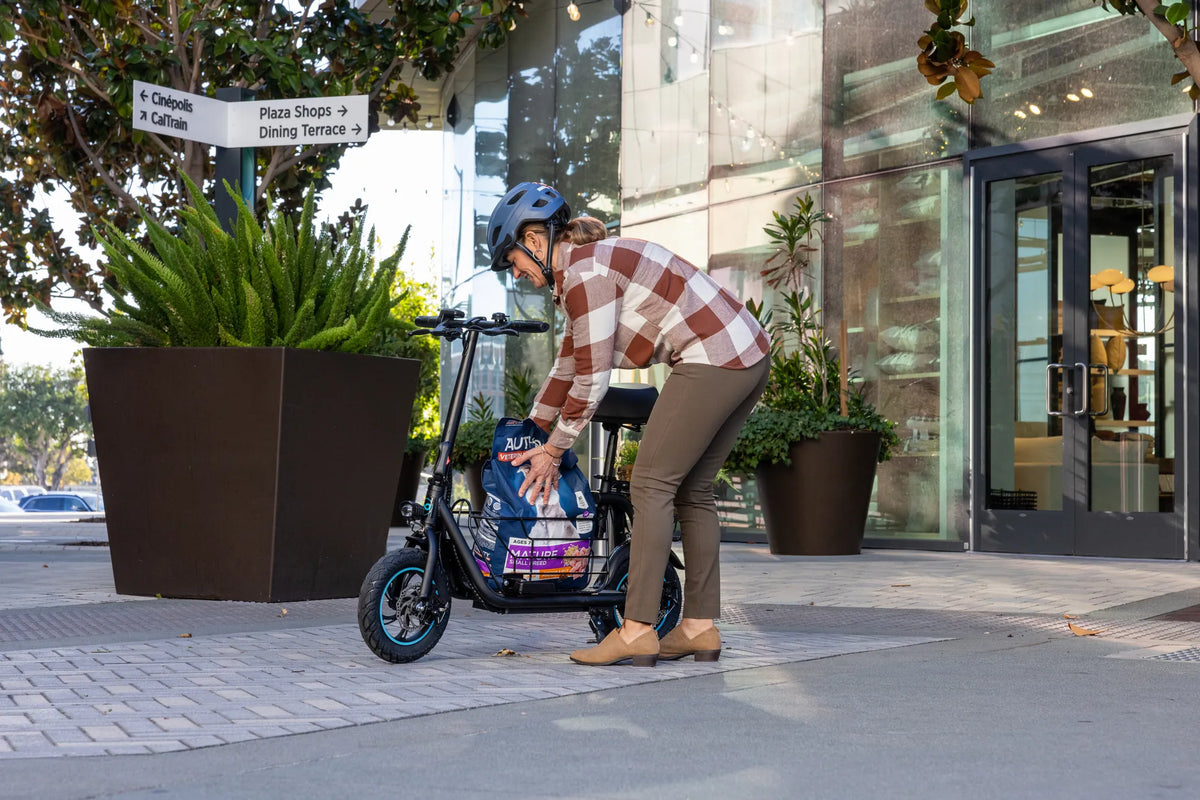
Introduction to Compact Mobility Scooters
A compact mobility scooter is a powerful tool for reclaiming independence. Designed for urban living, travel, and navigating tight spaces like shops or public transport, these scooters prioritize a small footprint without sacrificing essential performance. The right model can transform daily life, offering a reliable way to maintain an active lifestyle.
This guide will help you identify the best compact mobility scooter for your specific needs. We will dissect the critical features that separate a good scooter from a great one, from battery safety to structural integrity. You will learn how to evaluate specifications against real-world use.
Our analysis is grounded in data and engineering principles, not promotional hype. We believe informed decisions lead to greater satisfaction and safety. As a leading brand trusted by over 100,000 riders, Gyroor's commitment to UL-certified batteries and robust design informs our perspective on what constitutes a truly reliable compact scooter.
By the end of this article, you will possess a clear framework for selecting a scooter that offers not just portability, but also the durability and support needed for long-term confidence.
Key Features to Look for in a Compact Mobility Scooter
Selecting the best compact mobility scooter requires scrutiny of several interconnected specifications. These features directly impact safety, convenience, and daily usability. A focus on engineering quality over superficial specs is paramount.
Key metrics include the scooter's folded dimensions, weight capacity, and wheel configuration. These elements determine where you can store and use the scooter effectively. Ignoring any one can lead to a poor fit for your lifestyle.
Furthermore, the quality of core components like the motor, frame, and battery management system dictates long-term reliability. A scooter is an investment in mobility, and its construction should reflect that. We will now explore the most critical categories in detail.
Portability and Weight Capacity
Portability is the defining trait of a compact mobility scooter. The best models feature a quick-folding or easy-disassembly mechanism that reduces the scooter's size for car trunks or closet storage. Look for a one-step folding process that doesn't require excessive strength or tools.
The scooter's weight is a double-edged sword. A lightweight aluminum frame aids portability but must not compromise the weight capacity. A robust compact scooter should support at least 250-300 lbs, ensuring stability for a wide range of users. The unladen weight should ideally be under 50 lbs for manageable lifting.
Folded dimensions are more important than weight alone. Measure your storage space—car trunk, apartment corner—and compare it to the scooter's listed folded size. A difference of a few inches can be the deciding factor between a perfect fit and a constant hassle.
Battery Life and Charging
Battery performance defines your scooter's effective range. Manufacturers often list a "maximum range," but real-world mileage depends on rider weight, terrain, and use of accessories. A practical range for a compact scooter is 10-15 miles per charge for typical urban use.
Battery safety is non-negotiable. The best compact mobility scooter will use a UL-certified battery pack, like those in Gyroor models, which undergo rigorous testing for stability and longevity. These batteries are engineered for 500+ charge cycles, protecting against overheating and ensuring years of service.
Consider charging time and convenience. A fast charger (3-5 hours) is preferable to an overnight unit. Removable batteries add significant utility, allowing you to charge the battery indoors without bringing the entire scooter inside. This feature greatly enhances usability for those with limited outdoor power access.
Ride Comfort and Stability
Comfort stems from a well-designed suspension system and appropriate wheel size. Even compact models benefit from front or full suspension to absorb shocks from sidewalk cracks and minor imperfections. This reduces fatigue and improves control.
Stability is provided by a low center of gravity and a sufficient wheelbase. Larger wheels (8-10 inches) handle bumps and curb cuts better than tiny 6-inch wheels. Pneumatic (air-filled) tires offer a smoother ride than solid tires but require maintenance. The seat should be adjustable and offer adequate lumbar support for extended use.
The steering mechanism—whether tiller or delta-style—should allow for precise, effortless control. Anti-tip wheels at the rear are a critical safety feature, especially when navigating slopes or uneven ground. Never compromise on this element for the sake of compactness.
Comparing Top Compact Mobility Scooter Models
To identify the best compact mobility scooter for your situation, it helps to compare models by category. The market generally splits into ultra-portable designs and more capable all-terrain compacts. Your primary use case will determine the ideal balance.
The following table provides a high-level comparison of these two archetypes. Use it as a starting point to narrow your focus based on which specifications align with your daily needs and physical constraints.
| Feature | Ultra-Portable Model | All-Terrain Compact Model |
|---|---|---|
| Primary Use Case | Frequent car travel, tight apartment storage, as a travel companion. | Daily neighborhood errands, park paths, handling varied urban terrain. |
| Approx. Folded Dimensions (LxWxH) | 28" x 18" x 20" | 36" x 20" x 24" |
| Approx. Unladen Weight | 35 - 45 lbs | 55 - 65 lbs |
| Typical Wheel Size | 6 - 8 inches (solid or foam-filled) | 8 - 10 inches (pneumatic preferred) |
| Suspension | Basic or none | Front or full suspension common |
| Real-World Range | 8 - 12 miles | 12 - 18 miles |
| Ideal For | Users who prioritize lift-ability and minimal storage above all else. | Users needing a smoother ride over longer distances on varied surfaces. |
The Ultra-Portable Champion
This category represents the pinnacle of portability. The best compact mobility scooter in this class weighs under 45 lbs and folds into a shape resembling a suitcase. It is designed for users who must lift the scooter in and out of a car multiple times a day or live in a space with very limited storage.
These models excel at their core mission: being incredibly easy to transport. They often feature a simple, robust folding mechanism that can be operated with one hand. The trade-off comes in ride comfort and range, as smaller wheels and batteries are necessary to achieve such a small form factor.
For those who use a scooter primarily for shopping trips where it will be driven from the car park into the store, or for occasional travel, an ultra-portable is an excellent choice. It solves the fundamental problem of transport and storage with maximum efficiency. Gyroor's engineering in this segment focuses on maintaining a durable frame and safe battery system even at the lightest weights.
The All-Terrain Compact
This category is for users who need a true daily driver. An all-terrain compact mobility scooter sacrifices a small amount of portability for significantly enhanced capability. With larger wheels, often pneumatic, and suspension, it comfortably handles cracked sidewalks, grass, gravel paths, and minor slopes.
The increased size allows for a larger, higher-capacity battery, extending the practical range for running errands or visiting friends around the neighborhood. The ride is noticeably smoother and more stable, reducing physical strain on the user. The weight capacity also tends to be higher, accommodating more users securely.
If your scooter will be your primary mode of outdoor mobility and you have a garage, shed, or ground-floor space for storage, this is likely the best compact mobility scooter type for you. It offers a much more versatile and comfortable experience. Gyroor models in this category leverage IPX5 water-resistant designs, making them reliable in drizzly conditions, a key advantage for daily use.
Safety, Warranty, and Support: Non-Negotiables
Safety features on a mobility scooter are not optional extras; they are integral to its design. Effective lighting—bright front LED and rear brake lights—is essential for visibility in low-light conditions. Reflectors on the sides and rear add another layer of safety. These features are critical for urban navigation.
Beyond lights, physical safety elements are paramount. Anti-tip wheels prevent the scooter from tipping backwards on inclines. A reliable electromagnetic brake system that engages automatically when the throttle is released is a must. The frame should be constructed from high-grade aluminum or steel, tested for durability and stress points.
The warranty is a direct reflection of the manufacturer's confidence in their product. A strong warranty covers the frame, motor, and electronic controls for a significant period. The best compact mobility scooter will come with at least a 1-year comprehensive warranty, like Gyroor's, which protects your investment and provides peace of mind.
Accessible customer support is the final pillar. When questions or issues arise, you need a responsive team. Brands with dedicated, US-based support channels demonstrate a commitment to their customers post-purchase. This support is as crucial as any physical feature on the scooter itself.
Making the Right Choice: A Buyer's Checklist
Use this actionable checklist to methodically evaluate your needs against scooter specifications. Answering these questions will create a clear profile of your ideal best compact mobility scooter.
Step 1: Assess Your Primary Use. Will it be for daily errands, occasional travel, or both? Does your routine involve public transport, car travel, or purely neighborhood navigation? This determines the portability versus capability balance.
Step 2: Measure Your Storage & Transport. What are the exact dimensions of your car trunk or storage area? Can you comfortably lift 40 lbs, 50 lbs, or 60 lbs? Be brutally honest about your physical capabilities to avoid future strain.
Step 3: Calculate Your Required Range. Map out a typical day's trips. How many miles do you actually cover? Add a 30-40% buffer to the manufacturer's range estimate to account for hills, weight, and battery aging. This identifies the minimum battery capacity you need.
Step 4: Evaluate Environmental Needs. Do you live in a rainy climate? An IPX5 water-resistant rating, like that on Gyroor scooters, is highly recommended to protect electronics from spray and light rain, greatly enhancing reliability.
Step 5: Scrutinize Safety & Warranty. Confirm the presence of anti-tip wheels, effective lighting, and a UL-certified battery. Read the warranty document carefully. A 1-year full warranty is the industry benchmark for a quality product.
Frequently Asked Questions (FAQ)
Q: Can I take my compact mobility scooter on an airplane or bus?
A: Policies vary by airline and transit authority. Most airlines require scooters with non-spillable, UL-certified batteries under a certain watt-hour (Wh) rating, often 160Wh or 300Wh. You must contact the airline in advance. For buses, a compact, foldable scooter is often allowed if it can be secured in the wheelchair area without blocking aisles. Always check with your local transit provider first.
Q: How do I properly maintain the battery for maximum lifespan?
A> For lithium-ion batteries (the standard), avoid fully draining them. Try to recharge when the battery level drops to 20-30%. Use only the manufacturer-provided charger. Store the scooter in a cool, dry place, and if not using for extended periods, charge the battery to about 50-60% every few months. Gyroor's UL-certified packs are engineered for 500+ cycles with proper care.
Q: What is the true cost of ownership beyond the purchase price?
A> Factor in occasional replacement parts like tires (especially pneumatic ones), brake pads, and a new battery after 2-4 years of regular use. Also consider insurance, if desired, and potential maintenance costs. A scooter with a robust warranty and readily available parts, like those from established brands, minimizes long-term unexpected costs.
Q: How does the IPX5 water-resistant rating benefit me in daily use?
A> An IPX5 rating means the scooter's electrical components are protected against water jets from any direction. In practice, this allows you to safely ride in light rain, through puddles, or on damp surfaces without immediate worry of water damage. It significantly increases the scooter's usability and durability in real-world weather conditions, a key feature for daily riders.
Q: Are there any specific safety tips for first-time users?
A> Absolutely. First, practice in a safe, open area like an empty parking lot. Get used to the acceleration, braking, and turning radius. Always wear the provided safety belt. Start at the slowest speed setting. Be extra cautious on slopes, inclines, and wet surfaces. Plan your routes to avoid excessively steep hills. Finally, ensure all lights are functional before every ride, especially at dusk or dawn.
Conclusion: Regaining Freedom with Confidence
The journey to find the best compact mobility scooter culminates in a single goal: reliable independence. The ideal model is not merely the smallest or the cheapest, but the one that most seamlessly integrates into your life, offering safety, comfort, and durability day after day. It becomes an extension of your personal freedom.
This decision hinges on verified quality—UL-certified batteries, water-resistant construction, and a warranty backed by responsive support. These are the pillars that transform a purchase into a long-term investment in your mobility and well-being. Compromising on them risks compromising your confidence.
Gyroor embodies this principle, engineering scooters that meet rigorous standards for over 100,000 riders. The focus on certified safety components and thoughtful design, from IPX5 ratings to ergonomic controls, ensures that portability never comes at the expense of performance or peace of mind.
Ready to explore models that blend compact design with unwavering reliability? Browse the full Gyroor collection at gyruorboard.com to discover scooters built to empower your every journey.
Trike Bike Accessories: The Ultimate Guide to Safety, Comfort, and Utility
Can Two People Ride on a Scooter? Safety, Legality & Smart Alternatives